



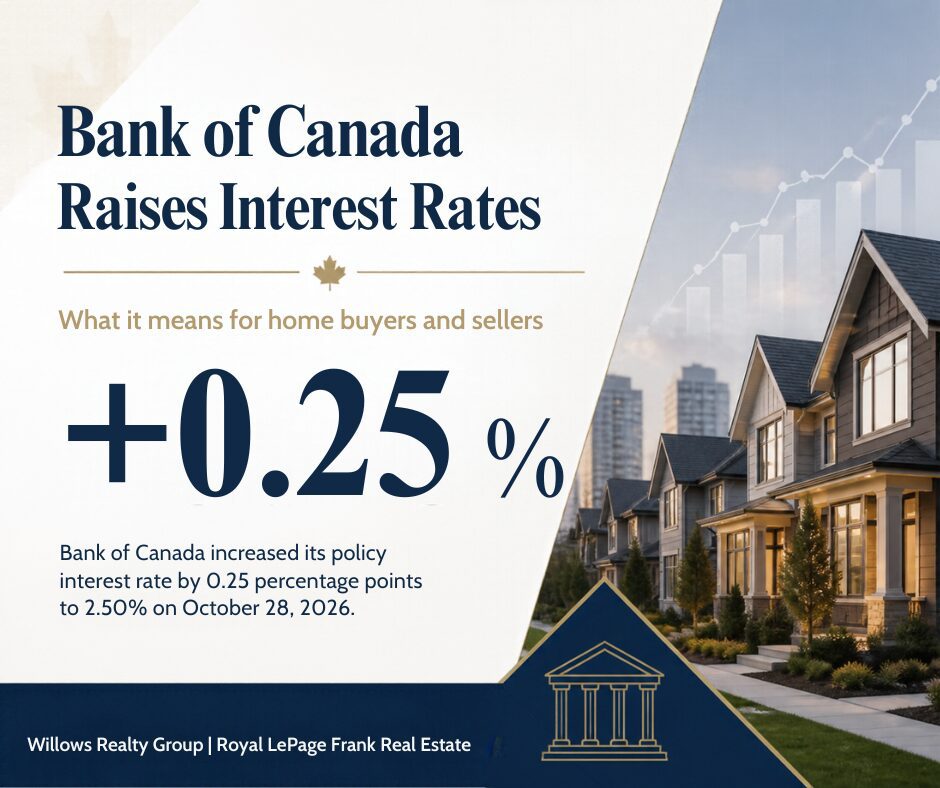
Just when Canadians were getting comfortable with lower interest rates, the Bank of Canada has changed direction.
On October 28, the Bank raised its key lending rate by 0.25 percentage points, bringing it to 2.50%. This marks the first increase since July 2023.
So, why did the Bank decide to raise rates when many Canadians are still dealing with a challenging economy? And what might happen at its next meeting on December 9?
Why did the Bank raise rates?
The biggest concern is inflation — the rising cost of everyday goods and services.
Higher oil prices, largely driven by the ongoing conflict in the Middle East, have pushed up gasoline, heating and transportation costs. Businesses are also paying more to produce and deliver goods, and the Bank is concerned those costs will increasingly be passed along to consumers.
Meanwhile, Canada’s economy has performed somewhat better than expected, giving the Bank more room to act.
The Bank now expects inflation to reach approximately 3.5% by the end of 2026 and remain around 3% through much of 2027. That’s well above its preferred target of 2%.
In simple terms, the Bank is trying to prevent today’s higher energy prices from turning into tomorrow’s higher prices for almost everything. Bank of Canada+1
What does this mean for the housing market?
For homeowners with variable-rate mortgages, borrowing costs may increase. Those with fixed-rate mortgages won’t see an immediate change to their existing rate, although future renewals could be affected.
For buyers, even a small rate increase can affect monthly payments and purchasing power.
For sellers, higher borrowing costs may cause some buyers to remain cautious, particularly in markets where homes are already taking longer to sell.
Here in Durham Region, where market conditions can vary considerably from one neighbourhood and price range to another, proper pricing and a well-planned marketing strategy remain especially important.
Will rates rise again on December 9?
That’s the big question.
Governor Tiff Macklem has made it clear that another increase is possible, but the Bank intends to proceed carefully.
Economists at Desjardins expect one additional rate increase, although the timing remains uncertain. Others point to Canada’s softer employment conditions, ongoing trade uncertainty and signs of slower economic growth as reasons the Bank could hold rates steady in December. Desjardins+2
The next decision will depend heavily on inflation, economic growth and whether rising business costs are showing up in consumer prices.
For now, another increase is a real possibility, but certainly not a sure thing.
What should buyers and sellers do?
The important thing is not to make real estate decisions based on predictions about interest rates alone.
Buyers may find opportunities in today’s more balanced or buyer-friendly markets, while sellers need to recognize that today’s buyers are watching their budgets carefully.
And remember, if you’re selling one home to buy another, you’re generally buying in the same market you’re selling in.
The bottom line: Interest rates matter, but so do your personal circumstances, your financial comfort level and the local market conditions affecting your particular home.
If you’re thinking about buying or selling, we’re always happy to help you understand what today’s market means for you.

Stay connected to the market.
Sign up to our digital newsletter community.